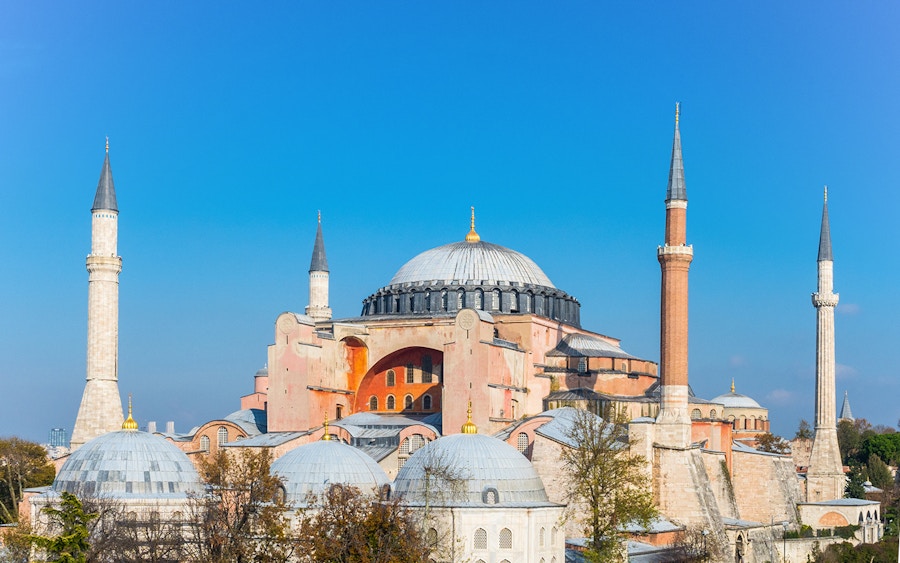
Istanbul
A transcontinental city straddling Europe and Asia, famous for its historic sites and vibrant bazaars.
Police
155
Ambulance
112
Tourist Police
0212 527 45 03
Risk Map & Attractions
Common Scams
The Friendly Bar Scam (Let's Have a Drink)
A well-dressed, English-speaking man approaches a solo male tourist, strikes up a friendly conversation, and invites him for a drink at a 'friend's' bar. The bar is a scam establishment where the tourist is pressured to buy overpriced drinks for himself and women who join the table. The final bill is exorbitant, often hundreds of Euros, and refusal to pay can lead to intimidation.
Never accept invitations from strangers to go to a bar or club. Politely but firmly decline and walk away. Research and only visit reputable, well-reviewed establishments.
The Carpet/Leather Shop Guide
A friendly local offers to guide a tourist to a landmark or shop. On the way, they stop at a carpet or leather shop, claiming they need to drop something off or that a family member works there. The tourist is then subjected to a high-pressure sales pitch, often involving tea and hospitality, making it difficult to leave without buying an overpriced item.
Be wary of unsolicited offers to guide you. If you are lost, ask uniformed officials or enter a legitimate business. Firmly decline any invitation to enter a shop you did not intend to visit.
The Dropped Brush (Shoe Shine Scam)
A shoe shiner walks past a tourist and 'accidentally' drops their brush or box. If the tourist picks it up and hands it back, the shiner insists on giving a 'free' shine as a thank you. After the shine is complete, they demand a ridiculously high price, often with 'colleagues' nearby to back them up if the tourist argues.
Do not pick up the brush. If it falls on your shoe, simply say 'no, thank you' and keep walking. If you want a shine, go to a stationary shiner and agree on the price beforehand.
The Long Route Taxi Ride
The taxi driver intentionally takes a longer, circuitous route to inflate the fare, especially when they realize the passenger is a tourist unfamiliar with the city's geography. Excuses include 'traffic' or 'getting lost'.
Use a navigation app (like Google Maps) to follow the route in real-time. If the driver deviates significantly, question them immediately. Use ride-hailing apps like BiTaksi or Uber (where available) for fixed prices.
The Lira Note Switch
When a tourist pays with a large Turkish Lira note (e.g., 50 TL), the taxi driver quickly swaps it for a smaller, similar-looking note (e.g., 5 TL) they have concealed. They then claim the tourist paid with the smaller note and demand the rest of the fare, confusing the tourist who is unfamiliar with the currency.
Always use small bills or exact change. When paying with a large bill, clearly state the value of the note and keep your hand on it until the driver acknowledges the value and prepares the change. Familiarize yourself with the currency.
The 'No Change' Scam
The taxi driver claims they do not have change for a large bill and expects the tourist to let the difference go as a 'tip' or overpayment. This is a common tactic to pocket a few extra Lira.
Insist on waiting while the driver gets change from a nearby shop or gas station. Often, they will 'magically' find the change. Always try to have small bills.
The Fixed Price vs. Meter Scam
The taxi driver suggests agreeing on a fixed price for the journey instead of using the meter, claiming it will be cheaper due to traffic or a shortcut. The fixed price is almost always significantly higher than the metered fare.
Always insist on using the meter. If the driver refuses, get out and find another taxi. The only exception is if you know the route and fare well and the fixed price is genuinely a good deal.
The Restaurant Menu Switch
Restaurants in tourist areas present tourists with a special menu (sometimes in their native language) that has significantly inflated prices compared to the Turkish menu given to locals. The goal is to overcharge the unaware tourist.
Compare prices with similar nearby restaurants. If possible, ask for the Turkish menu or check if prices are displayed outside. Be suspicious of menus without prices.
The Complimentary Item Charge
In tourist-focused restaurants, waiters will bring 'complimentary' items like bread, water, or nuts without being ordered. When the bill arrives, these items are listed with a charge. Similarly, asking for 'more' of a side dish may result in an extra charge.
Immediately send back any item you did not explicitly order. Be specific when ordering (e.g., 'tap water' or 'no bread'). Check the bill carefully before paying.
Pickpocketing in Crowds
Thieves operate in crowded areas, using distractions or simply taking advantage of tourists' inattention to steal wallets, phones, and other valuables from bags and pockets.
Keep wallets in front pockets. Wear backpacks on the front of your body in crowded areas. Secure handbags and keep them within sight. Be mindful of your surroundings, especially on public transport and in busy squares.
The Fake Police Officer
A person, sometimes in a uniform or claiming to be an undercover officer, approaches a tourist and asks to see their passport or wallet, often under the pretense of checking for counterfeit money or illegal currency exchange. They use this opportunity to steal cash or credit cards.
Never hand over your wallet or passport to anyone on the street. Legitimate police officers will not conduct random street checks of this nature. Ask to go to the nearest police station. Carry a photocopy of your passport and leave the original in your hotel safe.
The 'Helpful' Tram Ticket Seller
Unofficial individuals hang around tram and metro stations, offering to 'help' tourists buy an Istanbulkart (public transport card) or single-use tickets. They either overcharge for the service, sell invalid or expired cards, or distract the tourist while a pickpocket operates.
Only purchase Istanbulkart and tickets from official, clearly marked vending machines or kiosks inside the station. Ignore anyone offering unsolicited help with tickets.
Safe Attractions
Hagia Sophia
A stunning architectural marvel that has served as a cathedral and mosque.
Blue Mosque
Famous for its blue tiles and six minarets.