Police
999
Ambulance
999
Tourist Police
03-2149 6590
Risk Map & Attractions
Common Scams
The Long-Way Taxi Ride
Taxi drivers refuse to use the meter and quote an inflated fixed price, or agree to use the meter but intentionally take a circuitous route through heavy traffic to drive up the fare. They may also try to distract you from following the route on your phone.
Use ride-sharing apps like Grab, which offer fixed prices. If taking a taxi, insist on the meter and follow the route on a GPS app. Do not engage in distracting conversation if you suspect foul play.
The Executive Taxi Upgrade
Tourists are unknowingly directed or sold coupons for more expensive 'Executive' or 'Premier' taxis (larger vehicles) when a standard 'Budget' taxi would suffice, resulting in nearly double the fare for the same distance.
When booking at an airport or station counter, explicitly request a 'standard' or 'budget' taxi. Be aware of the different taxi classes and their corresponding rates.
The Nasi Campur Overcharge
At buffet-style Nasi Kandar/Nasi Campur restaurants, prices are often unlabelled. Staff may appear generous by giving double portions, but then charge tourists an inflated, on-the-spot price, sometimes rounding up significantly more than the actual cost.
Ask for the price of each item before it is added to your plate. Eat at less touristy locations or choose restaurants with clearly displayed prices. Be prepared to question the final bill.
The Organized Begging Ring
Children, often part of organized begging rings, approach tourists at outdoor dining areas to sell flowers or trinkets, or simply beg. Giving money supports the criminal practice and the exploitation of the children.
Do not give money or buy items. Report the activity to the tourist police. Politely but firmly ignore the approach.
ATM Card Skimming
Criminals install card-skimming devices over the actual card slot and tiny cameras or membranes over the keypad of ATMs to steal card data and PINs, leading to identity theft and unauthorized withdrawals.
Only use ATMs inside banks, malls, or busy transportation hubs. Avoid street ATMs. Wiggle the card slot to check for loose devices and always cover the keypad when entering your PIN.
The Fake Electronics Deal
Shops in malls, even large ones, sell convincing but fake or modified electronic devices (smartphones, laptops) at prices that are 'too good to be true.' These devices may also contain malware or backdoors.
Only purchase electronics from authorized, official brand stores. Be skeptical of significantly low prices. Assume any pirated software or cheap device may be compromised.
The Checkout Counter Distraction
Minimart cashiers, particularly at night, attempt to distract customers with friendly conversation during the transaction. They then use tricks like scanning a different barcode, closing the register drawer prematurely, or claiming no payment was received to overcharge or shortchange the customer.
Stay focused on the transaction. Do not allow yourself to be distracted. Watch the screen as items are scanned and count your change before leaving the counter.
The SIM Card Data Theft
Employees at cell phone kiosks perform a bait-and-switch when selling pre-paid SIM cards, charging for a large data package (e.g., 1GB) but only activating a smaller one (e.g., 500MB), keeping the remaining credit for themselves.
Purchase SIM cards from official carrier stores. Watch the employee apply the credit and immediately verify the data balance via the carrier's app or SMS service.
Rogue Public Wi-Fi Hotspots
Hackers set up fake Wi-Fi networks in public places with names like 'Free Airport WiFi' to capture login credentials by redirecting users to fake login pages for services like email or social media.
Use a Virtual Private Network (VPN). Only connect to official, verified Wi-Fi networks. Be wary of login pages that look suspicious or require logging in multiple times.
The Macaque Mugging
The macaques around the Batu Caves are notorious for snatching items like sunglasses, water bottles, and phones from tourists. This can result in the loss of valuables and a potential bite or scratch, requiring expensive rabies shots.
Do not carry food or drinks. Secure all loose items. If an item is snatched, do not play tug-of-war; let it go to avoid injury. Do not feed or interact with the monkeys.
Safe Attractions
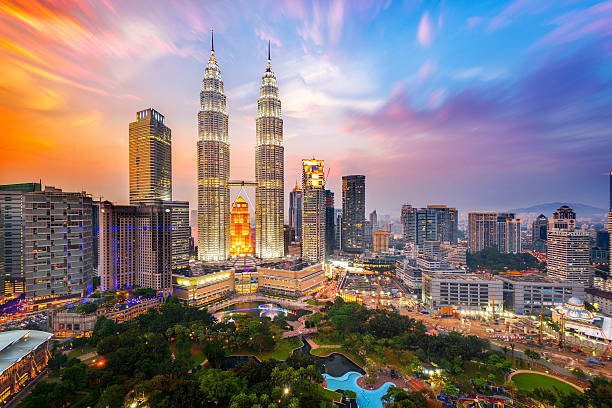
Petronas Twin Towers
Iconic twin skyscrapers with a skybridge and observation deck.
Batu Caves
Limestone hill with a series of caves and cave temples.
Merdeka Square
Historical square where the Malaysian flag was first raised.
KL Tower
Communications tower offering panoramic views of the city.
Thean Hou Temple
One of the oldest and largest temples in Southeast Asia.