Marrakesh
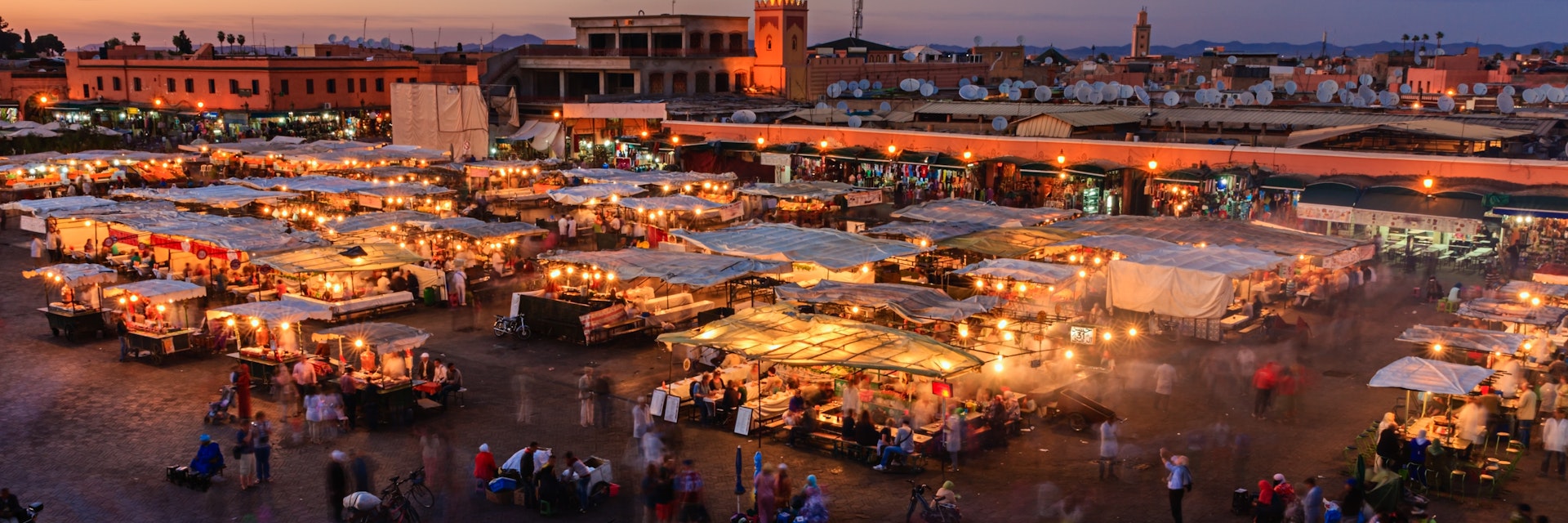
A sensory overload of colors, smells, and sounds in the heart of Morocco.
Police
19
Ambulance
15
Tourist Police
0524 38 46 01
Risk Map & Attractions
Common Scams
The 'Free' Directions Scam (Faux Guides)
A 'helpful local' approaches lost-looking tourists, offering to show them the way for free, often claiming they just want to practice English. After leading the tourist on a long, confusing route, they aggressively demand an exorbitant payment, often causing a scene to intimidate the tourist into paying.
Walk confidently and avoid looking at maps in public. Politely but firmly decline with 'La, Shukran' (No, thank you) and state 'no guide.' Ask a shopkeeper for directions instead of a street hustler.
The Tannery Trail Pressure Sale
Tourists seeking the tanneries are passed between a chain of 'helpful locals' who guide them to the entrance, which is often through a shop. After a quick tour, they are pressured into accepting 'free' mint tea and then aggressively sold overpriced leather goods or carpets.
Pre-arrange a licensed guide or use a reliable map/GPS. Do not accept 'free' tea or hospitality in a shop unless you are prepared to make a purchase. Be extremely firm in declining sales pitches.
Restaurant Menu Switch-a-roo
A restaurant uses a cheaper menu to entice customers to order. When the bill arrives, the price is much higher than expected. When the customer complains, the waiter produces a second, more expensive menu, claiming it was the one used for the order.
Take a photo of the menu you order from, or choose restaurants recommended by your riad or a trusted guidebook. If scammed, only pay what you believe is reasonable based on the original prices.
The 'Road is Shut' Detour
A local will tell tourists that the road or alley they are walking down is 'shut' or 'closed to tourists' to divert them onto a longer, more confusing route where they can be led to a shop or an unofficial guide can take over.
Ignore anyone who tells you a road is closed, especially if other locals are walking down it. Only trust official signs or police. Be aware that some souk sections do close at night.
Aggressive Henna Ladies
Henna artists in the main square will grab an unsuspecting tourist's hand and start drawing a design without permission. They then demand an inflated price. If the tourist refuses, they may smear the wet henna, leaving a mess.
Keep your hands in your pockets or close to your body when walking through Djemaa el Fna. If you want henna, agree on the design and price beforehand, or go to a reputable henna cafe. Avoid black henna as it can cause severe skin reactions.
Animal Handlers Photo Trap
Snake charmers or monkey handlers will aggressively place an animal on a tourist's shoulder or neck without warning. They then demand an extortionate fee for the 'photo opportunity' and become confrontational if refused.
Give a wide berth to all animal handlers and avoid eye contact. Firmly and immediately refuse any interaction. Do not encourage this practice for animal welfare reasons.
The 'No Change' Trick
After a price has been agreed upon for a purchase, the vendor claims they have no change for a large bill, hoping the tourist will waive the difference, effectively paying more than the agreed price.
Always carry small denominations of Dirhams. If the vendor claims no change, insist they get change from a neighboring stall. Do not give in to the pressure.
The 'Free' Pastry/Mint Tea Offer
A street vendor offers a 'free' sample of a pastry or mint tea. After the tourist accepts, the vendor then offers the rest of the product, but without the word 'free,' and demands an exorbitant price for the accepted item.
Be wary of anything offered as 'free' on the street. Politely decline all unsolicited food or drink offers from vendors. If you accept, be prepared to pay.
Taxi Meter Malfunction
Taxi drivers, especially at the airport or train station, will claim their meter is broken and demand a highly inflated, fixed price for the journey, or they will drive a long, indirect route to increase the fare.
Always agree on a price before getting into the taxi, or insist the driver use the meter. Use ride-sharing apps (if available) or pre-booked airport transfers for fixed, transparent pricing.
Paying for Photos
Street performers, water sellers, and even ordinary locals will demand payment if you take their photo, or even if they believe they are in the background of your photo. The price demanded is often much higher than expected.
Always ask permission and agree on a price *before* taking a photo of any person or performer. For the main square, take photos from a cafe terrace overlooking the area to avoid confrontation.
Safe Attractions
Jemaa el-Fnaa
The main square and market place in Marrakesh's medina quarter.
Jardin Majorelle
A two and a half acre botanical garden and artist's landscape garden.