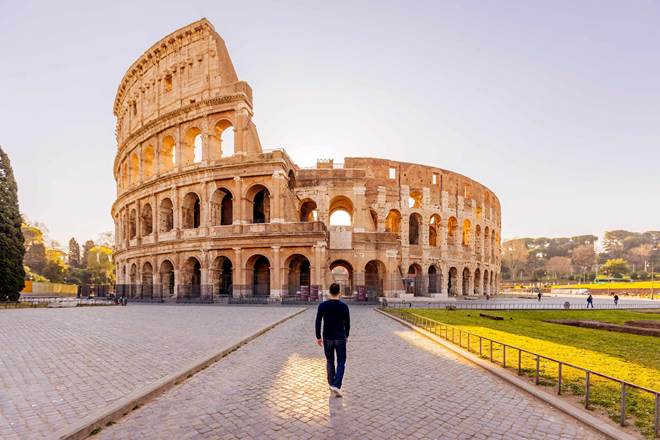
Rome
The capital city of Italy, known for its nearly 3,000 years of globally influential art, architecture and culture.
Police
112
Ambulance
118
Tourist Police
06 4686
Risk Map & Attractions
Common Scams
The 'Friendship' Bracelet Scam
A scammer, often near major tourist sites, will approach you in a friendly manner and attempt to tie a 'free' bracelet or string onto your wrist. Once it's on, they become aggressive and demand a high price (e.g., €10-€20) for the 'gift,' making it difficult to remove until you pay.
Do not engage with anyone trying to give you a 'gift' or tie something on you. Keep your hands in your pockets or cross your arms. Walk away immediately and firmly say 'No, grazie.'
The Fake Police Wallet Check
Two scammers, one acting as a plainclothes police officer and the other as a tourist, will approach you. The 'officer' will flash a fake badge and claim they are checking for counterfeit money or drugs, asking to see your wallet and passport. While distracted, they will quickly steal cash or credit cards.
Real police in Italy do not conduct random street checks of tourists' wallets. Never hand over your wallet. Ask to see their official ID and insist on going to the nearest police station (Questura) or calling the emergency number (112).
The Taxi Money Switch
When paying a taxi driver with a large bill (e.g., €50), the driver will quickly switch it for a smaller bill (e.g., €10) and then insist you only gave them the smaller amount, demanding the rest of the fare. This is often done with sleight of hand.
Pay with exact change or smaller bills. If you must use a large bill, announce the denomination clearly and keep your eyes on the bill until the transaction is complete. Use official taxi stands and verify the fixed airport rate before starting the journey.
The 'Bird Poop' Distraction Theft
A scammer will spray a foul-smelling liquid (often a mix of mustard and water) onto your shoulder or clothing, making it look like bird droppings. A 'helpful' accomplice will rush over to assist you in cleaning it up, using the distraction to pickpocket your wallet, phone, or bag.
If this happens, do not stop or let anyone 'help' you clean it. Immediately move to a safe, less crowded area, check your belongings, and clean yourself up privately.
The Fake Petition/Charity Scam
Scammers, often young women, will approach you with a clipboard asking you to sign a petition for a fake charity (e.g., for the deaf or disabled). Once you sign, they will aggressively demand a donation, often pointing to a section on the clipboard where others have supposedly donated large sums.
Do not stop or engage. Walk past them and ignore their attempts to get your attention. Legitimate charities do not operate this way in tourist areas.
The Overpriced 'Tourist Menu' Trap
Restaurants near major attractions will offer a 'Tourist Menu' or have no prices listed, serving low-quality, pre-cooked, or frozen food at exorbitant prices. They may also add unrequested items (like bread or water) to the bill or charge a high 'coperto' (cover charge).
Avoid restaurants with large, multi-language menus and pictures of food. Always check the menu and prices displayed outside. Look for places where locals are eating and check online reviews before sitting down.
The Pickpocket Swarm
Pickpockets, often working in groups, use various distraction techniques (e.g., bumping into you, creating a commotion, or dropping coins) to steal wallets, phones, and passports from bags and pockets in crowded spaces.
Wear a money belt or secure pouch under your clothes. Keep bags zipped and worn across the front of your body. Be extra vigilant in crowded transport and stations. Use carabiners to secure backpack zippers.
The Fake Ticket Scalper
Unauthorized individuals will approach tourists near major attractions like the Colosseum or Vatican, claiming to sell 'skip-the-line' or last-minute tickets at a premium. These tickets are often fake, expired, or simply non-existent, leaving the tourist stranded and out of money.
Only purchase tickets from the official attraction website, the official ticket office, or a reputable tour operator. Never buy tickets from street vendors or unverified sources.
The 'Gladiator' Photo Rip-Off
Men dressed as Roman Centurions or Gladiators stand near the Colosseum and offer to pose for a photo. After the photo is taken, they become aggressive and demand a large, non-negotiable fee (e.g., €20-€50) for the picture, often intimidating tourists into paying.
Do not take a photo with them, even from a distance. If you must, agree on a price *before* the photo is taken and only pay that amount. Note that this activity is technically illegal in Rome.
The 'Helpful' ATM User
A scammer will loiter near an ATM, often at a train station. When a tourist uses the machine, the scammer will 'helpfully' distract them, either by pointing out a supposed error or offering assistance, while an accomplice skims the card, views the PIN, or quickly grabs the cash as it's dispensed.
Only use ATMs inside banks or well-lit, secure areas. Cover the keypad when entering your PIN. Do not accept 'help' from strangers. If someone tries to distract you, cancel the transaction immediately and leave.
Safe Attractions
The Colosseum
An oval amphitheatre in the centre of the city of Rome.
Vatican City
Independent city-state enclaved within Rome, home to the Pope.